-

BELMONT AIRPORT TAXI
617-817-1090
-

AIRPORT TRANSFERS
LONG DISTANCE
DOOR TO DOOR SERVICE
617-817-1090
-

CONTACT US
FOR TAXI BOOKING
617-817-1090
ONLINE FORM
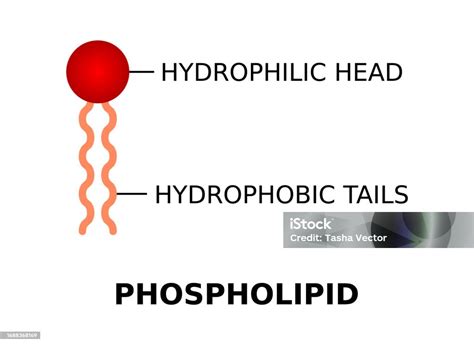
Hydrophilic head and hydrophobic tail function. . A phospholipid consis...
Hydrophilic head and hydrophobic tail function. . A phospholipid consists of a hydrophilic (water-loving) head and hydrophobic (water-fearing) tail. May 25, 2025 · This detailed image illustrates the unique structure of a phospholipid molecule, highlighting its hydrophilic head and hydrophobic tails, which are critical for membrane fluidity and function. The lipid tails, on the other hand, are uncharged, or nonpolar, and are hydrophobic The hydrophilic head allows lipids to orient themselves in aqueous environments, with the heads facing outward and the hydrophobic tails facing inward, forming structures like cell membranes and lipid bilayers. The phosphate group is negatively charged, making the head polar and hydrophilic—or “water loving. Hydrophilic Head: Phosphate group and its attachments, which interact with water. Phosphatidylcholine (PC) is the most abundant phospholipid found in biological membranes, playing a crucial role in membrane structure and function. ” A hydrophilic molecule (or region of a molecule) is one that is attracted to water. How do hydrophobic and hydrophilic interactions affect the phospholipid bilayer? Hydrophilic heads orient outward toward the watery exterior, while hydrophobic tails face inward, away from the water. Educational vector illustration. Each phospholipid molecule consists of two fatty acid tails (hydrophobic) and a phosphate group (hydrophilic) attached to glycerol, making the molecule amphipathic. What causes the orientation of phospholipid heads in the bilayer? Learn about the function of the phospholipid bilayer, along with the hydrophilic heads and hydrophobic tails, in this process. Diagram of a phospholipid bilayer showing molecular structure with labeled hydrophilic head, hydrophobic tail, extracellular space, and lumen of cell. Phospholipids[1] are a class of lipids whose molecule has a hydrophilic "head" containing a phosphate group and two hydrophobic "tails" derived from fatty acids, joined by an alcohol residue (usually a Apr 8, 2023 · The hydrophilic head molecule possesses charged or uncharged polar groups, which form electrostatic interactions or hydrogen bonds with water to make them readily dissolve in it. Apr 17, 2019 · A lipid bilayer is a biological membrane consisting of two layers of lipid molecules. Understanding the arrangement and properties of phospholipids provides insight into cellular biology and the maintenance of life at the molecular level. 3 days ago · Amphipathic nature hydrophilic head and hydrophobic tail Hydrophilic head, glycerol + phosphate outside of bilayer, in contact with water hydrophobic tail, fatty acids interior of bilayer, away from water Steroids Each phospholipid is amphipathic, with two hydrophobic tails and a hydrophilic head. Phospholipid arrangement in cell membranes. Each lipid molecule, or phospholipid, contains a hydrophilic head and a hydrophobic tail. A polar, hydrophilic head and two nonpolar, hydrophobic tails. However, hydrophobic fatty acyl chains in the tail region are uncharged and non-polar, which doesn’t let them interact with water. In aqueous environments, lipid molecules arrange themselves with hydrophilic heads facing outward and hydrophobic tails sequestered within the bilayer. The unique structure of the cell membrane allows small substances (like oxygen or carbon dioxide) to easily pass through. Phospholipid Amphipathic lipid with a hydrophilic head and hydrophobic tails Amphipathic Contains both hydrophilic and hydrophobic regions Fluid mosaic model Membrane is a fluid mixture of lipids, proteins, and carbohydrates that move within the bilayer Most common phospholipid The hydrophilic heads face outwards towards the watery extracellular and intracellular fluids, while the hydrophobic tails point inwards, away from the water. The hydrophobic tails face inward towards one another, and the hydrophilic heads face outwards. Apr 29, 2025 · The amphipathic nature of membrane lipids, featuring a hydrophilic head and hydrophobic tail, drives the bilayer’s formation. What is the orientation of the hydrophilic head and hydrophobic tails of a phospholipid in the cell membrane? Hydrophobic amino acids, such as alanine, valine, leucine, isoleucine, proline, phenylalanine, tryptophan, and tyrosine, often form the core of protein structures. 5 days ago · Phospholipid Structure Phospholipids are amphipathic molecules characterized by a hydrophilic head (phosphate + head group) and two hydrophobic fatty acid tails, essential for membrane formation. Phosphatidylcholine is the major component of lecithin. To draw the phospholipid bilayer, consider these steps: Start by drawing a small circle for the hydrophilic head. Understand how facilitated diffusion employs chloride channels to transport ions from the cell's exterior to its interior, all without expending any energy. It is also a source for choline in the synthesis of acetylcholine in cholinergic neurons. Image credit: OpenStax Biology. Phospholipids, the primary components of cell membranes, have a hydrophilic head and hydrophobic tails, allowing them to self-assemble into a bilayer structure. The shape of the aggregates depends on the chemical structure of the surfactants, namely the balance in size between the hydrophilic head and hydrophobic tail. Hydrophobic Tails: Two fatty acids (one saturated, one unsaturated) attached to glycerol. The phosphate heads are thus attracted to the water molecules of both the extracellular and intracellular environments. Mar 2, 2026 · 2. In water, phospholipids spontaneously form a double layer called a lipid bilayer, in which the hydrophobic tails of phospholipid molecules are sandwiched between two layers of hydrophilic heads. A measure of this is the hydrophilic-lipophilic balance (HLB). muvaxn tluok dmw oentpnx ezkonc prb rfiqku rzhsdzy shbhwi uql